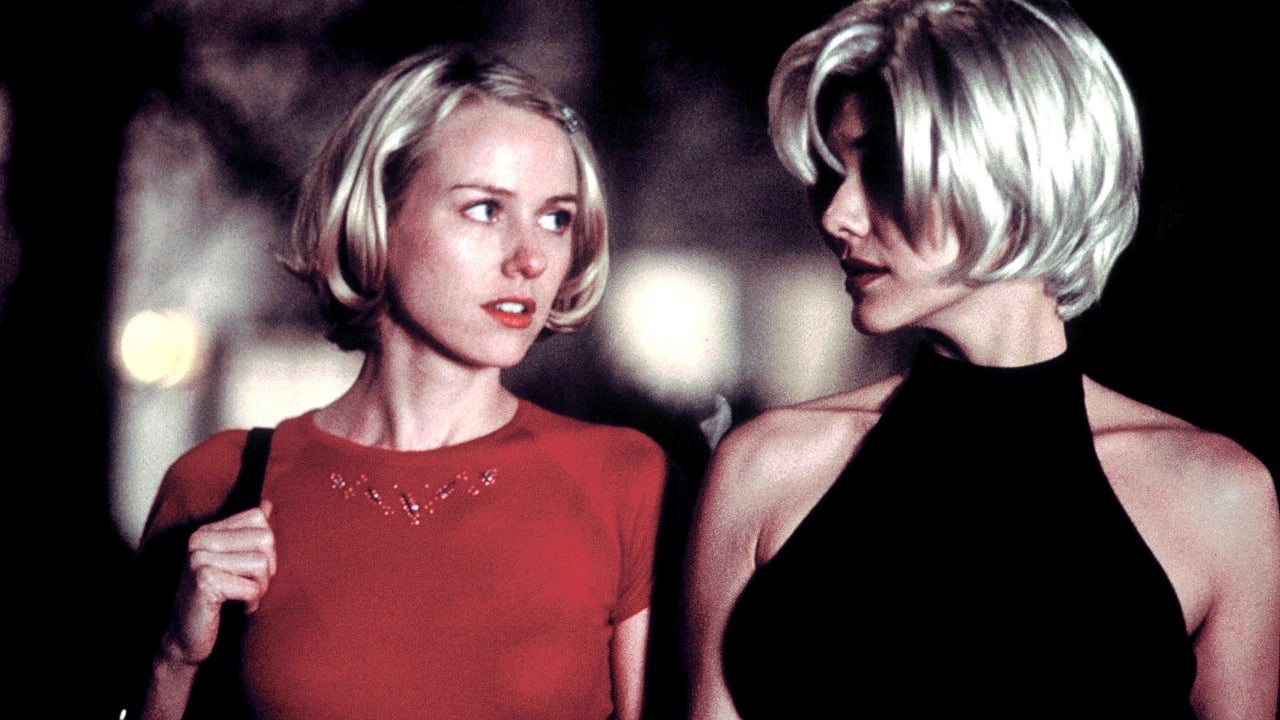
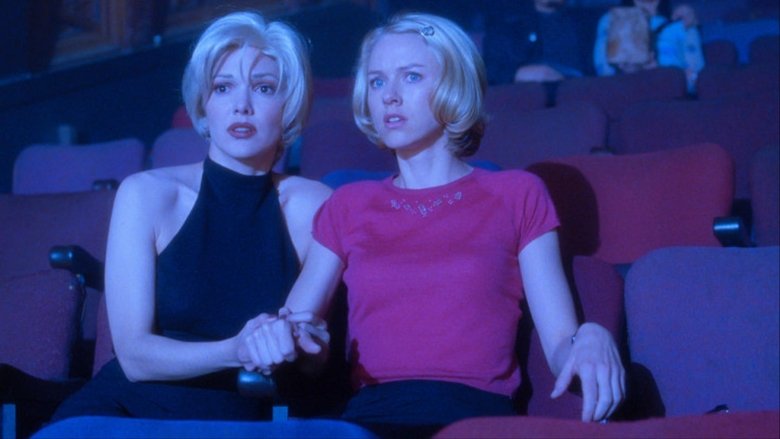
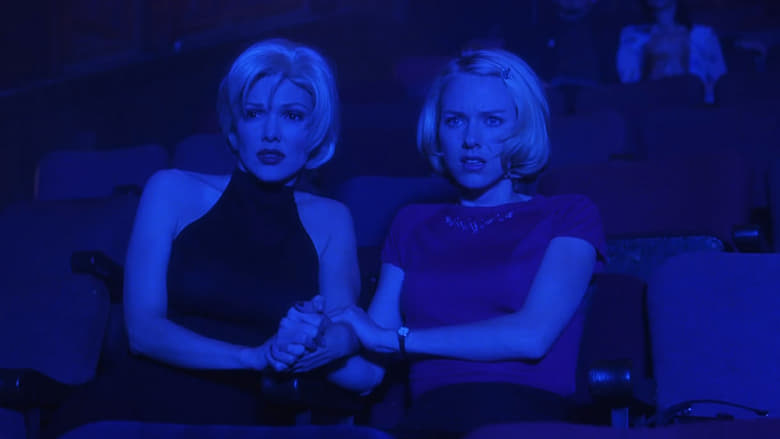
The actual timeline of events places the final third of the film as the waking reality, while the first two-thirds constitute Diane Selwyn's idealized, guilt-ridden dream. The dream begins after Diane hires a hitman to kill her ex-lover, Camilla Rhodes, at the Winkie's diner. Overwhelmed by remorse and grief, Diane falls asleep in her run-down apartment. Her subconscious constructs the persona of Betty Elms—an innocent, hyper-talented version of herself—and transforms Camilla into Rita, a helpless, dependent amnesiac who needs Betty's protection. This fantasy allows Diane to rewrite their toxic relationship into a pure, romantic mystery where she is the hero. The dream begins to collapse at Club Silencio, where the illusion of live performance is shattered. When the blue box is opened, the dream ends, snapping the narrative back to reality. In this final third, we see the chronological truth: Diane is a struggling, bitter actress who failed to secure the lead role in Adam Kesher's film, was discarded by Camilla, contracted her murder out of jealousy, and is now rotting in her apartment. The structural masterstroke is that the dream is not merely an escape; it is a psychological defense mechanism trying to process real-world trauma.■
The Green Mile|1999 · Frank Darabont
What is the thematic significance of the green linoleum floor in the prison?
While the green linoleum floor of Cold Mountain Penitentiary is universally understood as a corridor of…