The sound design of "Burning", paired with Mowg's minimalist score, functions as an invisible narrator that systematically deconstructs the viewer's sense of reality. Rather than using conventional thriller music to dictate emotional responses, the film relies on a sparse, unsettling acoustic landscape dominated by low-frequency bass drones, natural ambient sounds, and sudden, unexplained silences. Key audio motifs, such as the heavy breathing on Jong-su's phone calls, the distant hum of plastic greenhouses flapping in the wind, and the faint, garbled North Korean propaganda broadcasts, create an environment saturated with unseen threats. When music does appear, it is often discordant and jazz-inflected, most notably during Hae-mi's sunset dance where Miles Davis's "Générique" plays. This track, originally composed for Louis Malle's classic French noir "Ascenseur pour l'échafaud", carries heavy cinematic associations of urban alienation and doomed lovers, immediately charging the scene with a sense of tragic inevitability. The "aha" is that the film's soundscape operates on the same principle as the pantomime orange: it asks the audience to listen for what is not there, using silence and ambient noise to amplify the terrifying void left by Hae-mi's disappearance and Jong-su's growing isolation.■
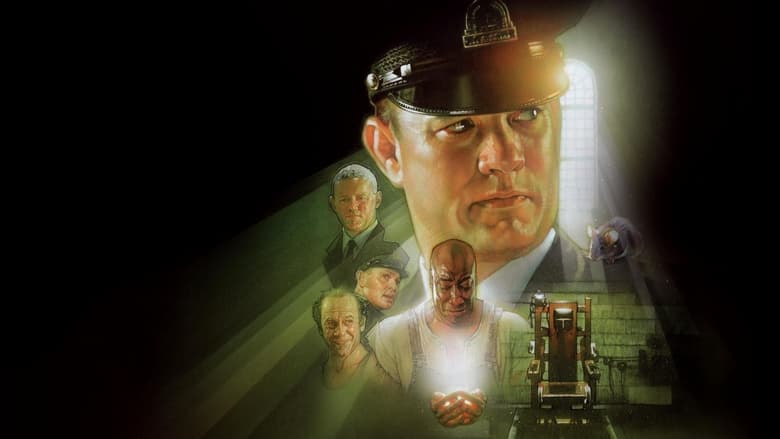
The Green Mile|1999 · Frank Darabont
What is the thematic significance of the green linoleum floor in the prison?
While the green linoleum floor of Cold Mountain Penitentiary is universally understood as a corridor of…